Short answer: No, FHA loans are not reserved solely for first-time buyers. Any borrower who meets the minimum qualification criteria for this program can use it to buy a house. But FHA loans are very popular among first-time buyers.

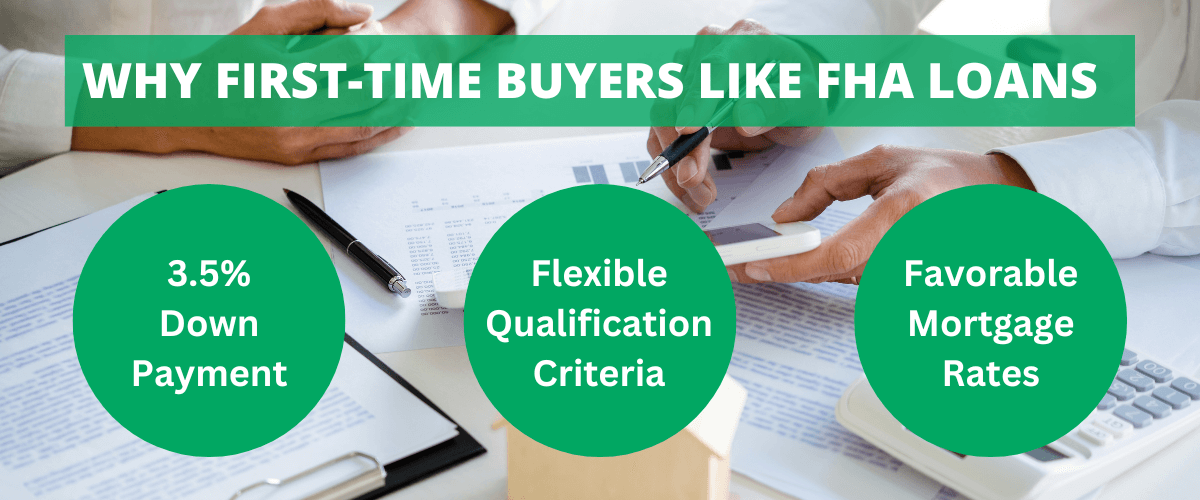
The FHA mortgage program is one of the most popular mortgage financing methods among first-time home buyers. That’s mainly because it offers a relatively low down payment along with flexible qualification criteria.
But you don’t have to be a first-time buyer to qualify for an FHA loan.
5 Things to Know Right Up Front
- FHA loans are not limited to first-time home buyers. Repeat buyers can qualify too, as long as they meet the program’s requirements and buy a primary residence.
- FHA loans are especially popular with first-time buyers because they offer a down payment as low as 3.5% and relatively flexible qualification criteria.
- Borrowers must meet requirements involving credit score, debt-to-income ratio, down payment, and property eligibility.
- FHA loans also have potential drawbacks, including mortgage insurance, loan limits, property requirements, and possible disadvantages in a hot housing market.
- The best mortgage option is the one that allows you to achieve your home-buying goals while minimizing risks and costs at the same time.
FHA Loans: Not Just for First-Time Buyers
The Federal Housing Administration (FHA) loan program is very popular among first-time home buyers in the U.S. According to an analysis from a couple of years ago, the FHA discovered that 82% of its purchase loans went to first-time buyers.
That percentage has remained remarkably stable over time, consistently landing between 82% and 83% year over year.
So clearly, first-time home buyers are the primary “customer base” for FHA-insured loans.
But the program is not limited or restricted to only this one group. Even people who have owned homes in the past can use FHA loans to buy another property, as long as the house being purchased will serve as their primary residence.
First-time and repeat home buyers alike can qualify for FHA loans if they meet the basic eligibility requirements. Those criteria include the following:
- A down payment of at least 3.5% of the purchase price or appraised value
- A manageable level of debt in relation to the monthly income (DTI ratio)
- A credit score of 580 or higher to qualify for the 3.5% down payment option *
* The official minimum credit score for FHA loan eligibility is 500. But most mortgage lenders won’t offer loans to first-time home buyers with scores that low. Additionally, the Federal Housing Administration requires a score of 580 or higher for the minimum 3.5% down payment mentioned above.
How the FHA Loan Program Works
Congress created the Federal Housing Administration in the 1930s to make homeownership more attainable for low- and moderate-income families. It was created in response to the Great Depression.
Over the years, it has become one of the most popular mortgage financing options for first time home buyers across the United States. To understand why, we have to look at how the program works.
The FHA does not lend money directly to borrowers. They simply insure home loans generated by mortgage lenders in the private sector. But this insurance protects the lender, not the borrower.
If a homeowner with an FHA loan defaults on their mortgage (i.e., stops making payments), the government will issue an insurance payout to cover the lender’s losses. So the program basically works like one big insurance fund.
Home buyers pay into it. The FHA manages it. And lenders benefit from it.
The bottom line here is that both repeat and first-time buyers can use FHA loans to buy a house. But all borrowers have to pay into the mortgage insurance fund. That’s what keeps the program running.
Why It Appeals to First-Time Buyers
So, why do so many first-time buyers in the U.S. choose FHA-insured mortgage loans over conventional or “regular” home loans? What’s the appeal?
Several factors contribute to this program’s popularity, but it mainly comes down to two things:
1. A down payment as low as 3.5%
The FHA loan program offers one of the lowest down-payment options of any mortgage program (aside from VA and USDA loans, which offer 100% financing).
While FHA loans are not just for first-time home buyers, they appeal to this group mainly because of the low down payment.
Borrowers who use this program can make a down payment as low as 3.5% of the purchase price or the appraised value, whichever is lower.
Example: On a $400,000 home purchase, the borrower could put down as little as $14,000. (Because 400,000 x .035 = 14,000.)
Previous homeowners often use the funds generated by selling one home to cover the down payment on their next purchase. But a first-time buyer obviously doesn’t have this luxury, so the down payment can become a major hurdle.
Because of this funding gap, many first-time home buyers in the U.S. seek mortgage loan programs that offer a relatively low down payment. And they often land on the FHA program for this very reason.
As an added benefit, the down payment can be gifted from a third party, such as a family member or close friend. So it doesn’t necessarily have to come out of the borrower’s pocket.
2. Flexible qualification criteria
Because of the government insurance backing, FHA loans tend to have more flexible qualification criteria when compared to conventional mortgage products (that are not backed by the government).
For first-time home buyers with past credit issues, low credit scores, and/or bankruptcies, FHA loans can be easier to obtain.
In fact, some borrowers who get turned down for conventional loans end up getting approved for the FHA program, without even changing anything.
Potential Drawbacks and Downsides
All mortgage loan products have pros and cons associated with them, and the FHA loan program is no different. First-time buyers considering this program should weigh the potential downsides as well, which can include:
1. You have to pay mortgage insurance on an FHA loan.
One significant drawback of FHA loans is the mortgage insurance premiums (MIP). Borrowers must pay an upfront premium, as well as annual premiums that get added to their monthly payments.
These ongoing premiums can increase the overall cost of your mortgage. And unlike some conventional mortgages, you might have to pay an insurance premium for as long as you keep your FHA loan.
2. There’s a government-imposed maximum loan limit.
FHA loans also come with limits on how much you can borrow. These government-imposed limits vary by county because they are based on median home prices (which also vary by location).
For 2026, the FHA loan limit for a single-family home ranges from $541,287 to $1,249,125 depending on the county. These limits can change annually to keep up with home prices. You can find the limits for your area on the HUD.gov website.
In a high-cost real estate market like San Francisco or Washington, D.C., an FHA loan might limit your housing options, forcing you to consider less expensive properties or make a larger down payment.
3. Homes must meet specific property requirements.
The FHA issues Minimum Property Requirements (MPRs) to ensure the home meets basic health and safety standards. While these requirements are designed to protect the buyer, they could also limit your options.
Homes needing significant repairs might not qualify for FHA financing.
4. FHA loans could hinder first-time buyers in competitive markets.
In a competitive housing market, some sellers might be hesitant to accept offers from buyers using FHA loans. This is due to the more stringent appraisal process, which can potentially lead to delays or renegotiations if property issues are identified.
Depending on current real estate market conditions in your area, this may or may not be an issue.
- In a seller’s market, where multiple offers are common, first-time home buyers using FHA loans might find themselves at a disadvantage.
- In a slower market, the seller might only receive one offer at a time, and be less “picky” as a result.
Ultimately, first-time buyers have to go with the mortgage option that works best for them, based on their financial situation and goals. Just know that your mortgage choice could affect you when making an offer.
What to Remember From This Guide
Here are the most important points to take away from this guide:
- FHA loans are not exclusively for first-time home buyers.
- Anyone who meets the minimum qualification criteria can use an FHA loan.
- This program is popular among first-time buyers due to its low down payment and flexible criteria.
- Eligibility criteria include a down payment of at least 3.5%, an acceptable debt-to-income ratio, and a credit score of 580 or higher (for the 3.5% down payment).
- The FHA does not lend money directly to borrowers, but insures home loans generated by private lenders.
- Borrowers must pay mortgage insurance premiums to cover lender losses in case of default.
- Ultimately, borrowers should choose the mortgage option that best suits their financial situation.
Learn more: If you found this guide helpful, be sure to download our comprehensive FHA loan handbook. It’s the only handbook of its kind written specifically for home buyers.